Mostrando entradas con la etiqueta yantra. Mostrar todas las entradas

miércoles, 8 de enero de 2014

Tripurasundari - The Godness Who is Beautiful in the Three Worlds


Tripurasundari (Lalita)  is the primary goddess associated with the Shakta Tantric tradition known as Sri Vidya.The Goddess Who is "Beautiful in the Three Worlds" (Supreme Deity of Srikula systems); the "Moksha Mukuta"

'Tripura' means 'the three cities,' and 'sundarī' means 'beautiful,' specifically a beautiful female. Therefore, her name means 'Beautiful (Goddess) of the Three Cities'. Tripura is often popularly translated as 'the three worlds;' however, this is an incorrect translation of the original Sanskrit.

The 'three cities' esoterically refers to a variety of interpretive doctrines, but commonly refers to the triple form of the goddess as found in the triadic doctrine of Shaktism. According to Bhaskararaya's commentary of the Tripura Upaniṣad.

There are three forms of deity: physical (sthūla), subtle (sūkṣma) and supreme (parā). Now the first [physical anthropomorphic form of the deity] is described in its respective meditative verses (dhyānaśloka); the second [subtle form] consists of the [particular deity's] respective root-mantra (mūlamantra); the third [supreme or transcendent form] consists of contemplative worship [of the deity's yantra]. Because deities are threefold in form, contemplative worship (upāsti) is divided threefold respectively into external sacrifice (bahiryāga) [performed primarily to the physical form of the deity], silent repetition (japa) [on the subtle form root-mantra] and internal sacrifice (antaryāga) [in the form of contemplative worship (upāsti) of the yantra].
Even though the bindu cakra [the "drop" in the center of the śrīcakra, is only one point] it has a threefold nature... The three deities created [and] not different from [her supreme] peaceful (śānta) [aspect] are [the three creative powers,namely,] Icchāśakti, Jñānaśakti, and Kriyāśakti. The female deities named Vāmā, Jyeṣṭhā, and Raudrī [identified with the three śaktis are complemented] by the three [male consort] forms of Brahmā, Viṣṇu, and Rudra which are not different creations from [her all-subsuming aspect called] Ambikā.

The traditional interpretation of Tripurā's name in Tantric soteriology involves a rather technical discussion of different levels of spiritual insight and worldly accomplishment, the fate of the individual soul (ātman) in the karmic process, and the concepts of external (bahir-) and internal sacrifice (antaryāga).

Tripura also refers to the Śrīcakra, the yantra that represents the highest vibrational form of Tripurasundari, according to the commentator on the sutra of Gauḍapādā.[6] Bhaskararaya notes in his commentary on Tripura Upaniṣad that the śrīcakra, composed of nine interlocking triangles, is triple in nature.

Tripurasundari is described as being of dusky, red, or golden in color, depending on the meditational form, and in union with Shiva. The couple are traditionally portrayed on a bed, a throne, or a pedestal that is upheld by Brahma, Vishnu, Rudra, Ishana(another form of Shiva, depicted in the Tantras) and Sadashiva forming the plank. She holds five arrows of flowers, a noose, a goad and a sugarcane as a bow. The noose represents attachment, the goad represents repulsion, the sugarcane bow represents the mind and the arrows are the five sense objects.

Bala Tripurasundari is another form of Tripurasundari, depicted as an independent young pre pubescent goddess who is 9 years of age, also known as a kumari. She is said to be the daughter of Lalita Maha Tripurasundari. Bala Tripurasundari's mantra and yantra differs completely from that of Maha Tripurasundari. The only Temple of Bala Tripurasundari Bhagawati is located at Tripurakot of Dolpa district of Nepal where Adhi Shankaracharya had prayed and worshipped due to renowned exaltation of Bala Tripurasundari Bhagawati Temple. Tripurasundari is also worshipped as the Sri Yantra, which is considered by practitioners of Sri Vidya to be a more true representation of the goddess.

Tripurasundari combines in her being Kali's determination and Durga’s charm, grace, and complexion. She has a third eye on her forehead. Usually four-armed and clad in red, the richly bejeweled Tripurasundari sits on a lotus seat laid on a golden throne. An aura of royalty characterizes her overall bearing and ambiance.

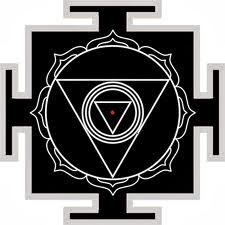
Tripurasundari  Yantra


Tripurasundari Mantra

Shodashi Tripura Sundari - Mahavidya Mantra

http://en.wikipedia.org/wiki/Tripura_Sundari

Tara - The Goddess as Guide and Protector, or Who Saves


In Hinduism, the goddess Tara  meaning "star", is the second of the Dasa (ten) Mahavidyas or "Great Wisdom [goddesses]", Tantric manifestations of Mahadevi, Kali, or Parvati. As the star is seen as a beautiful but perpetually self-combusting thing, so Tara is perceived at core as the absolute, unquenchable hunger that propels all life.

The oral tradition gives an origin to the goddess Tara. The legend begins with the churning of the ocean between the Devas and Asuras. Lord Shiva drank the poison (Halahala) that was created from the churning of the ocean (in the process turning his throat blue and earning him the epithet Nilakantha), thus saving the world from destruction, but fell unconscious under its powerful effect. Tara Ma appeared and took Shiva on her lap. She suckled him, the milk from her breasts counteracting the poison, and he recovered. This story is reminiscent of the one in which Shiva stops the rampaging Kali by becoming an infant. Seeing the child, Kali's maternal instinct comes to the fore and when she was feeding him her breast milk Shiva sucked her rage out while sucking the milk. In both cases, Shiva assumes the position of an infant vis-à-vis the Goddess. Mainly Tara is a form of Durga or Parvati. As Per Shakti Mahabhagwat, She is the one who created 1st Seed from which the entire universe took birth in the form of Lord Vishnu. Since he was Non manifested divinity so next Mahavidya expanded him so that manifested divinity Lord Brahma took birth from him.

Kali and Tara are similar in appearance. They both are described as standing upon a supine Shiva in an inert or corpse-like form. However, while Kali is described as black, Tara is described as blue. Both wear minimal clothing, however Tara wears a tiger-skin skirt, while Kali wears only a girdle of severed human arms. Both wear a necklace of severed human heads and the previously mentioned girdle of arms. Both have a lolling tongue, and blood oozes from their mouths. Their appearances are so strikingly similar that it is easy to mistake one for the other. Indeed, they are often said to be manifestations of each other; for example, in their thousand-name hymns they share many epithets as well as having each other's names. Tara, for example, is called Kalika, Ugra-kali, Mahakali, and Bhadra-kali. Tara is said to be more approachable to the devotee (Bhakta) or Tantrika because of her maternal instincts; however a large population of Bengali Hindus approach Kali herself as "Ma" or "mother".

Like Kali, furthermore, Tara in her Hindu context enjoys blood. In her hymn of a hundred names from the Mundamala-tantra, she is called "She Who Likes Blood", "She Who Is Smeared with Blood" and "She Who Enjoys Blood Sacrifice". The Tara-tantra describes Tara's delight in both animal and human blood but says that the latter is more pleasing to her. The blood of devotees is to be taken from specified parts of the body, such as the forehead, hands, breasts, head, or area between the eyebrows; some of these areas may correspond to the different chakras, spiritual centers within the body.

Tara can be distinguished visually from Kali primarily via her implements. Four armed, she carries a sacrificial sword, a severed head or skull cup, a lotus and scissors. Kali never holds a lotus or a pair of scissors.

Tara Yantra


Tara Mantra

Green Tara Mantra

http://en.wikipedia.org/wiki/Tara_(Devi)

martes, 7 de enero de 2014

Chinnamasta - the Hindu Godness of transformation


Chinnamasta, also known as Chhinnamastika and Prachanda Chandika is one of the Tantric goddesses in Hinduism. In Tantric Buddhism she is known as Chinnamunda. Chinnamasta devi is a form of Shakti who is ferocious and Chinnamasta means, 'severed head'. The Hindu Divine Mother is commonly identified with her fearsome iconography.

Chinnamasta is one of the most outrageous forms of divinity in Hinduism. The self-decapitating Goddess is one of the important and worshipped Shaktipat goddess. Chinnamasta symbolises both life-giver and life-taker. One of the goddesses of Mahavidyas, Chinnamasta is considered both as a symbol of self-control on sexual desire as well as an embodiment of sexual energy, depending upon interpretation.

The mythology emphasizes her sacrifice with maternal element, her sexual dominance and her self-destructive fury. As her approach is dangerous and ferocious, she is not worshipped everywhere. Her temples are mostly found in Northern India and Nepal. So She is recognised by both Hindus and Buddhists. Chinnamasta is closely related to Chinnamunda - the severed-headed form of the Tibetan Buddhist goddess, Vajrayogini.

Chinnamasta is mostly depicted nude and with dishevelled hair in blood red or black coloured body. In the texts, She is described to be a sixteen-year-old girl with full breasts and has a blue lotus near her heart. She is standing over a naked couple. The couple is said to be Rati, Goddess of sexual desire, and her husband Kama, God of love. Chhinnamasta is depicted wearing a serpent as a sacred thread and a garland of skulls or severed heads and bones like Maa Kali. Blood streams out of her neck and Her two female attendants Dakini and Varnini (also called Jaya and Vijaya) are drinking the blood.

On the left hand, She carries her own severed head (in a platter or a skull-bowl). On the right hand, She holds a khatri (a scimitar or knife) by which she decapitated herself.

There are many stories about the birth of Chinnamasta Devi. One legends of Narada-pancharatra narrates this story- Once while having bath in Mandakini river, Goddess Parvati got sexually excited and turned black. Meanwhile Her two attendants Dakini and Varnini (also called Jaya and Vijaya) get hungry and ask the goddess to satisfy their hunger. Goddess Parvati looks around but couldn't find anything to eat. So She severes her head and the blood flows in 3 directions; one in Jaya's mouth, other in Vijaya's mouth and the third in Parvati's mouth.

Another story shows Chinnamasta who is standing over a naked couple which is said to be Rati and Kama. Standing on the body, the goddess masters the physical body, and to free her mind from this, Chinnamasta cuts her head.

Chinnamasta signifies that life, death and sex- three forms of transformation, three parts of the cycle . Chinnamasta is not that popular as an individual goddess. Tantric practitioners worship Chhinnamasta for acquiring siddhis or supernatural powers.

Yantra


Mantra

Chhinnamasta Mantra To Demolish Enemies