De la revista “Cabala” – Julio – 1993 (Caracas, Venezuela)

Los siguientes dioses fundaron el panteon de los Eslavos: Svarog era el dios del cielo y Dazhbog, el del Sol; Stribog era el dios de los elementos del aire y Makosh el de la mujer;Pereplut era el dios de las profundidades de la Tierra y Perún el de la tormenta; los demas dioses eran menos importantes.

El padre de todos los dioses del cielo (“Svarozhiches”) era Svarog, dios del cielo y el fuego. En la India el significado del nombre Swarga era “El Cielo de Indra” y los Eslavos consideraban que este era el dios principal. Svarog vivia en el “Arbol del Mundo” (que era Yasen o Arbol de Ceniza). Gracias a este arbol, la gente comezo a trabajar el hierro.
Los Eslavos balticos respetaban a Radigast (o Redigast), que correspondia a Svarog, y le oraban en Retre-Radgost, un centro de culto. A Radigast lo pintaban con un escudo sobre el pecho y sobre el escudo dibujaban un hacha y sobre su casco habia un gallo con las alas extendidas. A veces lo dibujaban con cabeza humana y patas de toro. En otra version, tenia cabeza de leon con un ganso sentado sobre ella. Los simbolos de este dios eran un caballo blanco y un jabali saliendo del mar (el jabali era el simbolo del Sol).

Otro centro religioso Eslavo era la ciudad de Arkon, ubicada en la isla Rügen. Alli se encontraba al templo de Sviatovit (o Svantovit), que era el dios de la Guerra, el Sol y la Victoria. El templo, de Madera, constaba de dos partes. Habia simbolos del dios cerca del idolo: una silla, una brida, una espada y un estandarte. Tambien habia muchos trofeos de cazadores. A Sviatovit lo dibujaban con cuetro cabezas, dos miraban hacia adelante y dos hacia, atras. Su color era el rojo. Por esa razon, habia mucha ropa y cortinas purpura en el templo, incluso el techo era rojo. Un caballo blanco vivia en el templo. Los Eslavos creian que Sviatovit montaba a caballo cada noche y salia a luchar contra las fuerzas del mal. Para predecir el futuro, se conducia el caballo hacia tres hileras de lanzas. Si el caballo tropezaba con su pata derecha significaba Buena suerte y si lo hacia con la izquierda era un mal presagio.
Las fiestas en honor a Sviatovit se celebraban al final de la cosecha y se le ofrecia un pastel mas grande que un ser humano. Sviatovit sostenia un cuerno en su mano. Dicho cuerno se llenaba de vino una vez al año y los Eslavos predecian tambien el futuro por medio del mismo. Si a fin de año habia menos vino en el cuerno, significaba una mala cosecha en el futuro. Sviatovit correspondia a Svarog.
Las fiestas en honor a Sviatovit se celebraban al final de la cosecha y se le ofrecia un pastel mas grande que un ser humano. Sviatovit sostenia un cuerno en su mano. Dicho cuerno se llenaba de vino una vez al año y los Eslavos predecian tambien el futuro por medio del mismo. Si a fin de año habia menos vino en el cuerno, significaba una mala cosecha en el futuro. Sviatovit correspondia a Svarog.

Dazhbog fue designado hijo de Svarog (Svarozhich) y era el dios del Sol y la naturaleza, patrono de la cosecha y el matrimonio. Segun la mitologia, fue uno de los primeros zares e introdujo el calculo y el uso del calendario solar. Seconsideraba que Dazhbog era el padre de la tribu rusa.

El dios del disco solar (pero no del resplandor) era Khors y por lo general se le colocaba cerca de Dazhbog. Khors (o Khoros) no tenia culto propio. Tambien se le conocia como “un ojo antiguo” o “el ojo del cielo”. Khors aparecia como un caballo y es por esa razon que su simbolo era cabeza de este animal (hors en ingles).
La esposa de Dazhbog era la diosa de la Luna. Su nombre era Chislobog o Nochena. Las estrellas eran hijas del Sol y la Luna.
Otra pareja era Lada y Lado. Lada era la diosa de la juventud, la belleza y la fertilidad. La fiesta en su honor se celebraba el primero de mayo.

Su esposo Lado era el dios de la belleza, la luz, la paz y amor. Para el se sacrificaba un gallo blanco. Lel y Polel eran sus hijos gemelos. El primero: dios de la alegria y la passion; y el Segundo: de la familia.
Lialia (o Lelia) era la hija de Lada y era al mismo tiempo hermana y esposa de Lel. Perun era su padre. Lialia era la diosa del amor, la alegria y la primavera.
Zhiva (Zhivana, Siva) era la diosa de la vida y podia presentarse como un cuclillo en vista de que ese era su simbolo. Las fiestas en honor a Zhiva y Lada se celebraban el primero de mayo. Zhiva era representada como una mujer desnuda con el cabello largo hasta las rodillas.
Mara (Morena, Marzhana) era la diosa del perjuicio, la hostilidad, la muerte y el frio. Un animal relleno, denominado Marzhana, era el simbolo del invierno y se quemaba uno cada primavera para asegurar una buena cosecha. En las cuentos populares la diosa de la ira y muerte Mara se convierte en la hermosa Snegurochka (“Blanco como la nieve”), que en la noche de Ivan Kupala (el 24 de junio) saltaba a traves del fuego…

Makosh (o Mokosh) era la diosa de la fertilidad, el bienestar y la abundancia; era patrona del trabajo de las mujeres (hilado y tejido) y madre de la cosecha. Era tambien la diosa de la fortuna y el exito, la madre de la felicidad. Por las noches, tejia en las casas. Esta diosa era representada como una mujer de cabeza muy grande y manos largas elevadas hacia el cielo. El miercoles era su dia.
El dios Semargl (Simargl) estaba relacionado con Makosh. Semargl era el dios de los brotes y los vegetales, y el patrono de los retoños y las plantas. Los Eslavos consideraban que Semargl se encontraba entre los dioses del cielo y la Tierra. A este dios lo representaban como un perro-ave.
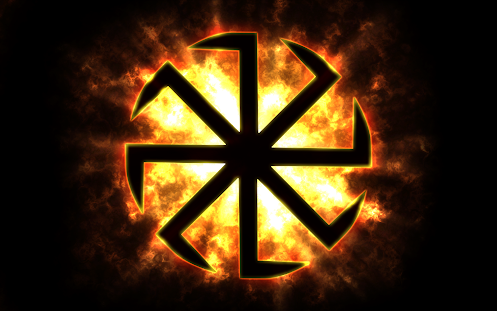
El culto de Perún (el dios de la tormenta) revestia especial importancia en la formacion del Estado Ruso. Perun se transformo en patrono de los principes y sus ejercitos. Perun encabezaba el Panteon. Los Eslavos creian que Perun vivia en el cielo en un templo cerca del roble (arbol ysimbolo de dios). La imagen de Perun estaba adornada con una barba plateada y bigotes dorados. Sus brazos podian ser una hacha, un rayo, una lanzao una vara. Perun aparecia como un jinete que salia de su templo para ir a luchar contra la nube-serpiente. Usaba sus flechas de oro para combatir las fuerzas del mal. El ave de este dios era el gallo. Los Eslavos estaban seguros de que Perun implanto un embrion en el cuerpo de la mujer y promovio la fertilidad del suelo.
El Jueves era el dia de Perun y las fiestas en su honor se celebraban el 20 de Julio. La gente creia que el Arco Iris “bebia” el agua de rios y lagos para entregarsela a la lluvia. Por esa razonconsideraban peligroso bañarse en presencia del Arco Iris, ya que el mismo podia levantar a la gente y llevarla hacia el cielo.
Dodola tambien era esposa de Perun y era patrona de la primavera. A Dodola la adornaban con hierbas y flores, y cuando la paseaban por los campos, los campesinos la refrescaban con agua para pedirle lluvia.
Veles (o Volos, Vels) era enemigo de Perun y era el dios de los pastores y la riqueza, patrono de la cria de Ganado y fundador de las artes. La gente no sabia si Veles habia creado el Ganado o se lo habia robado a Perun. Veles era el dios de la agricultura y los campesinos le ofrecian los tallos de las plantas de maiz. La constelacion de las Pleyades recibio ese nombre en honor de Veles – Volosyni. Por las noches los Eslavos le pedian a Veles tener tantas ovejas como estrellas habia en el cielo. En las canciones populares, la gente se referia a Veles como “Abuelo del pan” y lo representaba como un macho cabrio o un anciano. En estos cuentos populares, Veles era la serpiente Zmiulan. El zar del fuego (Perun) y su esposa Malania (el relampago) lucharon contra Zmiulan, lo mataron y se llevaron sus rebaños.
Entre los dioses de los Eslavos, Troyan (o Triglav) era uno de los mas misteriosos. Segun la mitologia, Troyan tenia su propio pueblo y solo salia de durante la noche para ver a su amada, una joven comun y corriente. Los Eslavos creian que Troyan tenia tres cabezas con orejas de macho cabrio y alas de cera. Una de las cabezas comian hombres, otra Ganado y otra pescado. Todo esto simboliza su gran poder sobre la Tierra.
Yarilo tambien era un dio bastante misterioso. Fue muy popular, incluso en el siglo XX; pero no se le consideraba dios popular, sino demonio.
Los Eslavos tambien tenian un dios de la Guerra. Su nombre era Yarovit y sus simbolos, un escudo y un casco dorados. Era imposible dirigirse a el durante epocas de paz. Sin embargo, en tiempos de Guerra, los Eslavos sacaban el escudo y el casco del templo para ponerlos ahte las tropes. Yarovit tambien era patrono de la fertil primavera al igual que Yarilo. Durante la primavera y el verano los campesinos organizaban una fiesta llamada “Yarilki”.
Una joven vestida con ropa de hombre interpretaba a Yarilo, que descansaba sobre un caballo blando mientras la gente cantaba y bailaba a su aldedor. Tambien se llevaba a cabo una ceremonia que representaba el funeral de Yarilo. Un animal relleno, que representaba a Yarilo. Era adornado con un gran pene. Durante el funeral, la gente cantaba y le pedia al dios que reviviera y se pusiera de pie. Todo esto significaba que Yarilo era el dios de la naturaleza y los Eslavos creian que se presentaba como un hombre joven, vestido de blanco, sentado sobre un caballo blanco. Su paso presagiaba buenas cosechas, y cuando miraba a alguien era signo de que comenzaba a amor a esa persona. Los juegos eroticos activos indicaban buenas cosechas.
Didilia (Dzidzilia) era la diosa del nacimiento de los niños. Los Eslavos le ofrecian sacrificios para tener hijos y creian que Didilia estaba presente en cada nacimiento.
Pogoda era el dios de la claridad, los dias buenos y la primavera. Su esposa era Zimtserla, diosa del amanecer y el atardecer.
Stribog era el dios del aire y el viento. Desde el principio se le dibujo como un aguila con flechas en sus garras. Los Eslavos creian que Stribog daba inicio a las tormentas de nieve.

Pereplut era el dios de las profundidades de la Tierra y patrono de las semillas y los brotes. Los Eslavos le ofrecian incluso sacrificios humanos.
En el año 980, el principe Vladimir Sviatoslavich consideró que solo seis dioses debian conformar la religion unida. Dichos dioses eran Perun, Khors, Dazhbog, Stribog, Semargl y Makosh, encabezados por Perun. Sin embargo, en el año 988 Rusia se transformo en estado cristiano concluyendo asi la historia de la religion de los primeros eslavos.

Dodola tambien era esposa de Perun y era patrona de la primavera. A Dodola la adornaban con hierbas y flores, y cuando la paseaban por los campos, los campesinos la refrescaban con agua para pedirle lluvia.
Veles (o Volos, Vels) era enemigo de Perun y era el dios de los pastores y la riqueza, patrono de la cria de Ganado y fundador de las artes. La gente no sabia si Veles habia creado el Ganado o se lo habia robado a Perun. Veles era el dios de la agricultura y los campesinos le ofrecian los tallos de las plantas de maiz. La constelacion de las Pleyades recibio ese nombre en honor de Veles – Volosyni. Por las noches los Eslavos le pedian a Veles tener tantas ovejas como estrellas habia en el cielo. En las canciones populares, la gente se referia a Veles como “Abuelo del pan” y lo representaba como un macho cabrio o un anciano. En estos cuentos populares, Veles era la serpiente Zmiulan. El zar del fuego (Perun) y su esposa Malania (el relampago) lucharon contra Zmiulan, lo mataron y se llevaron sus rebaños.
Entre los dioses de los Eslavos, Troyan (o Triglav) era uno de los mas misteriosos. Segun la mitologia, Troyan tenia su propio pueblo y solo salia de durante la noche para ver a su amada, una joven comun y corriente. Los Eslavos creian que Troyan tenia tres cabezas con orejas de macho cabrio y alas de cera. Una de las cabezas comian hombres, otra Ganado y otra pescado. Todo esto simboliza su gran poder sobre la Tierra.
Yarilo tambien era un dio bastante misterioso. Fue muy popular, incluso en el siglo XX; pero no se le consideraba dios popular, sino demonio.
Los Eslavos tambien tenian un dios de la Guerra. Su nombre era Yarovit y sus simbolos, un escudo y un casco dorados. Era imposible dirigirse a el durante epocas de paz. Sin embargo, en tiempos de Guerra, los Eslavos sacaban el escudo y el casco del templo para ponerlos ahte las tropes. Yarovit tambien era patrono de la fertil primavera al igual que Yarilo. Durante la primavera y el verano los campesinos organizaban una fiesta llamada “Yarilki”.
Una joven vestida con ropa de hombre interpretaba a Yarilo, que descansaba sobre un caballo blando mientras la gente cantaba y bailaba a su aldedor. Tambien se llevaba a cabo una ceremonia que representaba el funeral de Yarilo. Un animal relleno, que representaba a Yarilo. Era adornado con un gran pene. Durante el funeral, la gente cantaba y le pedia al dios que reviviera y se pusiera de pie. Todo esto significaba que Yarilo era el dios de la naturaleza y los Eslavos creian que se presentaba como un hombre joven, vestido de blanco, sentado sobre un caballo blanco. Su paso presagiaba buenas cosechas, y cuando miraba a alguien era signo de que comenzaba a amor a esa persona. Los juegos eroticos activos indicaban buenas cosechas.
Didilia (Dzidzilia) era la diosa del nacimiento de los niños. Los Eslavos le ofrecian sacrificios para tener hijos y creian que Didilia estaba presente en cada nacimiento.
Pogoda era el dios de la claridad, los dias buenos y la primavera. Su esposa era Zimtserla, diosa del amanecer y el atardecer.
Stribog era el dios del aire y el viento. Desde el principio se le dibujo como un aguila con flechas en sus garras. Los Eslavos creian que Stribog daba inicio a las tormentas de nieve.
Pereplut era el dios de las profundidades de la Tierra y patrono de las semillas y los brotes. Los Eslavos le ofrecian incluso sacrificios humanos.
En el año 980, el principe Vladimir Sviatoslavich consideró que solo seis dioses debian conformar la religion unida. Dichos dioses eran Perun, Khors, Dazhbog, Stribog, Semargl y Makosh, encabezados por Perun. Sin embargo, en el año 988 Rusia se transformo en estado cristiano concluyendo asi la historia de la religion de los primeros eslavos.